
Search Engine Optimization (SEO) has evolved dramatically over the last few years, and in 2026 Artificial Intelligence (AI) is at the center of this transformation. From content creation and keyword research to search engine algorithms and user experience, AI is reshaping how websites rank on Google and other search engines. AI is not changing SEO but whose person are use AI in the field of SEO they are changing SEO in AI.
For businesses, marketers, and website owners, understanding AI-driven SEO is no longer optional—it’s essential for staying competitive online.
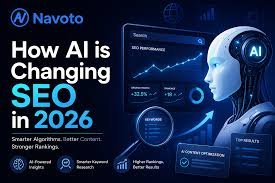
How AI Is Changing SEO in 2026
Search Engine Optimization (SEO) is evolving faster than ever, and Artificial Intelligence is one of the biggest reasons behind this change. In 2026, SEO is no longer just about adding keywords to a webpage or building backlinks. Search engines are becoming smarter, users are expecting better answers, and AI-powered tools are helping marketers create, optimize, and analyze content more efficiently than before.
Whether you’re a blogger, business owner, or digital marketer, understanding how AI is changing SEO has become essential. From content creation and keyword research to search intent analysis and user experience optimization, AI is influencing almost every aspect of modern SEO. In this guide, we’ll explore how AI is reshaping the SEO landscape in 2026, the opportunities it creates, and what you can do to stay ahead of the competition.
What Is AI SEO?
AI SEO refers to the use of artificial intelligence tools and machine learning technologies to improve search engine optimization strategies. AI helps analyze large amounts of data, identify trends, automate repetitive tasks, and provide insights that would take humans much longer to discover.
Popular AI tools such as ChatGPT, Gemini, Claude, Surfer SEO, and Semrush AI features are helping marketers create better content and optimize websites more efficiently.
How AI Is Transforming SEO in 2026
1. Smarter Search Engine Algorithms
Search engines now use advanced AI systems to understand user intent rather than simply matching keywords.
Google can identify:
- What users really mean when they search
- The context behind search queries
- Content quality and relevance
- User satisfaction signals
This means websites can no longer rank by stuffing keywords into content. Instead, they must provide valuable and accurate information.
2. AI-Powered Content Creation
Creating content has become faster with AI writing tools. Marketers use AI to:
- Generate blog ideas
- Create content outlines
- Write first drafts
- Improve readability
- Optimize content for SEO
However, Google still prioritizes helpful, original, and experience-based content. Simply publishing AI-generated content without human editing may not produce strong rankings.
3. Better Keyword Research
AI tools can identify:
- Long-tail keywords
- Search intent
- Trending topics
- Content gaps
- Competitor opportunities
Instead of targeting a single keyword, marketers now focus on topic clusters and semantic SEO to cover a subject comprehensively.
4. Voice Search Optimization
As voice assistants become more advanced, users increasingly search using conversational language.
For example:
Instead of typing:
“best digital marketing agency Delhi”
Users may ask:
“Which is the best digital marketing agency near me in Delhi?”
AI helps search engines understand these natural language queries, making conversational content more important than ever.
5. Personalized Search Results
AI enables search engines to deliver highly personalized results based on:
- Location
- Search history
- Device type
- User behavior
- Interests
This means businesses need to focus on local SEO, user experience, and audience-specific content to reach their target customers.
6. AI Improves Technical SEO
AI-powered SEO tools can quickly identify:
- Broken links
- Slow-loading pages
- Crawl issues
- Duplicate content
- Mobile usability problems
This allows website owners to fix technical issues faster and improve overall search performance.
7. User Experience Becomes More Important
Google’s AI systems increasingly evaluate how users interact with websites.
Important ranking factors include:
- Page speed
- Mobile responsiveness
- Content quality
- Navigation structure
- User engagement
Websites that provide a better experience are more likely to achieve higher rankings.
Benefits of AI in SEO
Faster Workflow
AI automates repetitive SEO tasks, saving valuable time.
Better Data Analysis
AI can process large amounts of data and identify actionable insights.
Improved Content Strategy
AI helps discover topics that users are actively searching for.
Enhanced User Experience
Businesses can create more relevant and personalized content.
Competitive Advantage
Companies using AI effectively can outperform competitors in search rankings.
Challenges of AI SEO
Despite its benefits, AI also presents challenges:
- Over-reliance on automation
- Generic content creation
- Accuracy issues
- Increased competition
- Need for human expertise
The most successful SEO strategies combine AI efficiency with human creativity and expertise.
The Future of SEO with AI
In 2026 and beyond, SEO will become increasingly focused on:
- Search intent
- Topical authority
- User experience
- E-E-A-T (Experience, Expertise, Authoritativeness, and Trustworthiness)
- AI-assisted optimization
Businesses that adapt to these changes will have a significant advantage in search engine rankings.
Conclusion
AI is revolutionizing SEO in 2026 by making search engines smarter and optimization strategies more data-driven. While AI tools can streamline content creation, keyword research, and technical SEO, success still depends on creating valuable content that genuinely helps users.
The future belongs to marketers who combine AI technology with human expertise to deliver the best possible search experience.
Frequently Asked Questions (FAQs)
1. What is AI SEO?
AI SEO is the use of artificial intelligence tools and technologies to improve website rankings, content optimization, keyword research, and overall search engine performance.
2. Can AI-generated content rank on Google?
Yes, AI-generated content can rank if it is helpful, accurate, original, and provides value to users. Human editing and expertise are still important.
3. Which AI tools are best for SEO in 2026?
Popular AI SEO tools include ChatGPT, Surfer SEO, Semrush AI, Jasper, Frase, Gemini, and Claude.
4. Is keyword research still important with AI?
Yes. Keyword research remains important, but marketers now focus more on search intent, topic clusters, and semantic relevance.
5. How does AI affect local SEO?
AI improves local search results by understanding user location, preferences, and intent, making local SEO optimization more important than ever.
6. Will AI replace SEO professionals?
No. AI can automate tasks, but SEO professionals are still needed for strategy, creativity, analysis, and decision-making.
7. How can businesses use AI for SEO?
Businesses can use AI for content creation, keyword research, competitor analysis, technical SEO audits, and performance tracking.
8. What is the biggest SEO trend in 2026?
The biggest trend is optimizing content around user intent and topical authority rather than focusing solely on individual keywords.
9. Does AI help improve website rankings?
AI can help improve rankings by identifying optimization opportunities, improving content quality, and solving technical SEO issues.
10. What skills should SEO professionals learn in 2026?
SEO professionals should learn AI tools, content strategy, technical SEO, data analysis, user experience optimization, and prompt engineering.
Related Posts
How to Rank Your Google Business Profile in 2026
If you're a local business owner, ranking your Google Business…

Top 8 Benefits of Freelance Digital Marketing Jobs
Top 8 Benefits of Freelance Digital Marketing Jobs For those…

Instagram Marketing Strategies That Work in 2026
Instagram continues to be one of the most powerful platforms…